Property
| Ownership: | Co-op |
|---|---|
| Rooms: | 9 |
| Bedrooms: | 4 BR |
| Bathrooms: | 4 |
| Pets: | No Pets Allowed |
Financials
Listing Courtesy of Brown Harris Stevens Residential Sales LLC
Be sure to watch the video for additional context.
Description
Be sure to watch the video for additional context.
The Dakota is the crown jewel among the most extraordinary residences of Central Park West. It's the most storied residential building in New York's long history. The late 1870s was a time of burgeoning prosperity. A post-war boom saw the proliferation of Mansion and Townhouse living for the affluent; it was a representation of status. It was then that Edward Cabot Clark, architect of the Singer Sewing Machine Company fortune, conceived of an apartment house to be built, as an alternative, for precisely those affluent who preferred not manage the responsibilities of caring for a
house. His vision was to preserve the aspirational and distinctive way of life characterized by sophistication, exquisite taste, privacy, pleasure and service for those accustomed. This was to be a house of a different kind.
Clark commissioned Henry Janeway Hardenbergh to design what would become the most magnificent residence in all of Manhattan. A "genteel fortress" as it was once described, monumental in scale yet with the intimacy of home. A fortress in that it was built with nearly 4 foot thick walls at its base, tapering to approximately 2 feet at the roof line. The breadth of the floors, made of thick layers of massive timber, earth and mortar provide an energy of stillness and peace. The facade possesses an eclectic mix of steep gables, oriel windows, dormers, cupolas, finials and the nostalgic gas lanterns. As you pass through the elaborate iron gates you're transported to a private open air garden court. Together this remarkable assemblage of features has made it difficult to pinpoint an exact style, which has been described in prior writings as a mix between German and French Renaissance styles, even as Victorian Chateau, Victorian Kremlin, Brewery Brick, Pseudo-Gothic and Middle European Post Office. No two apartments are structurally the same.
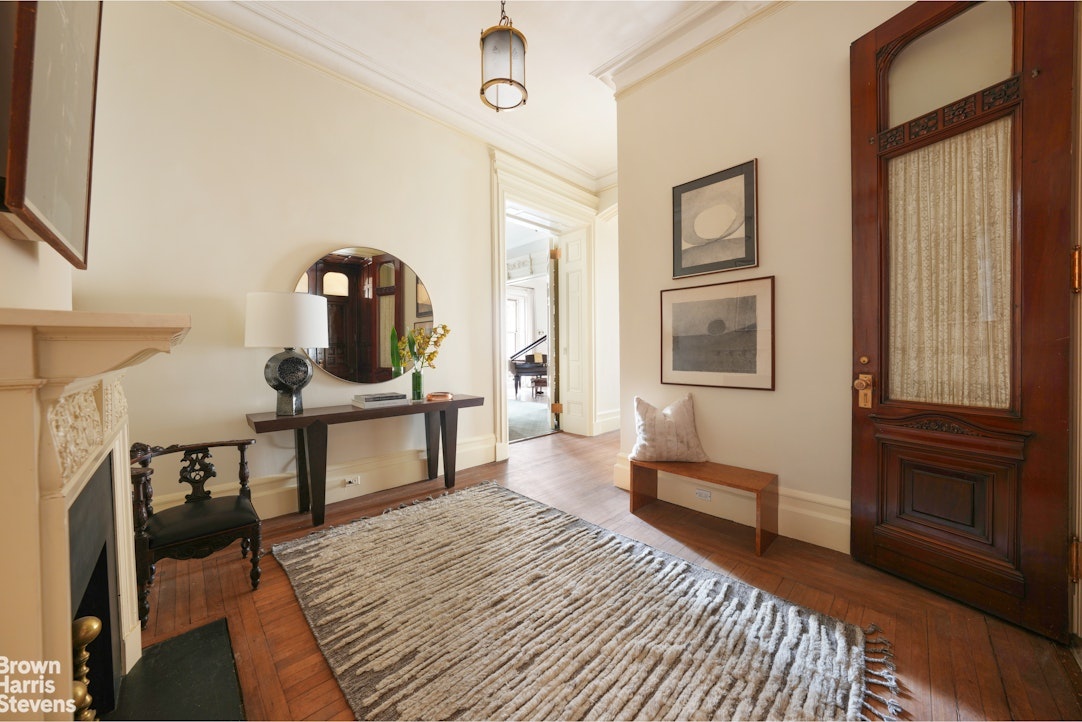
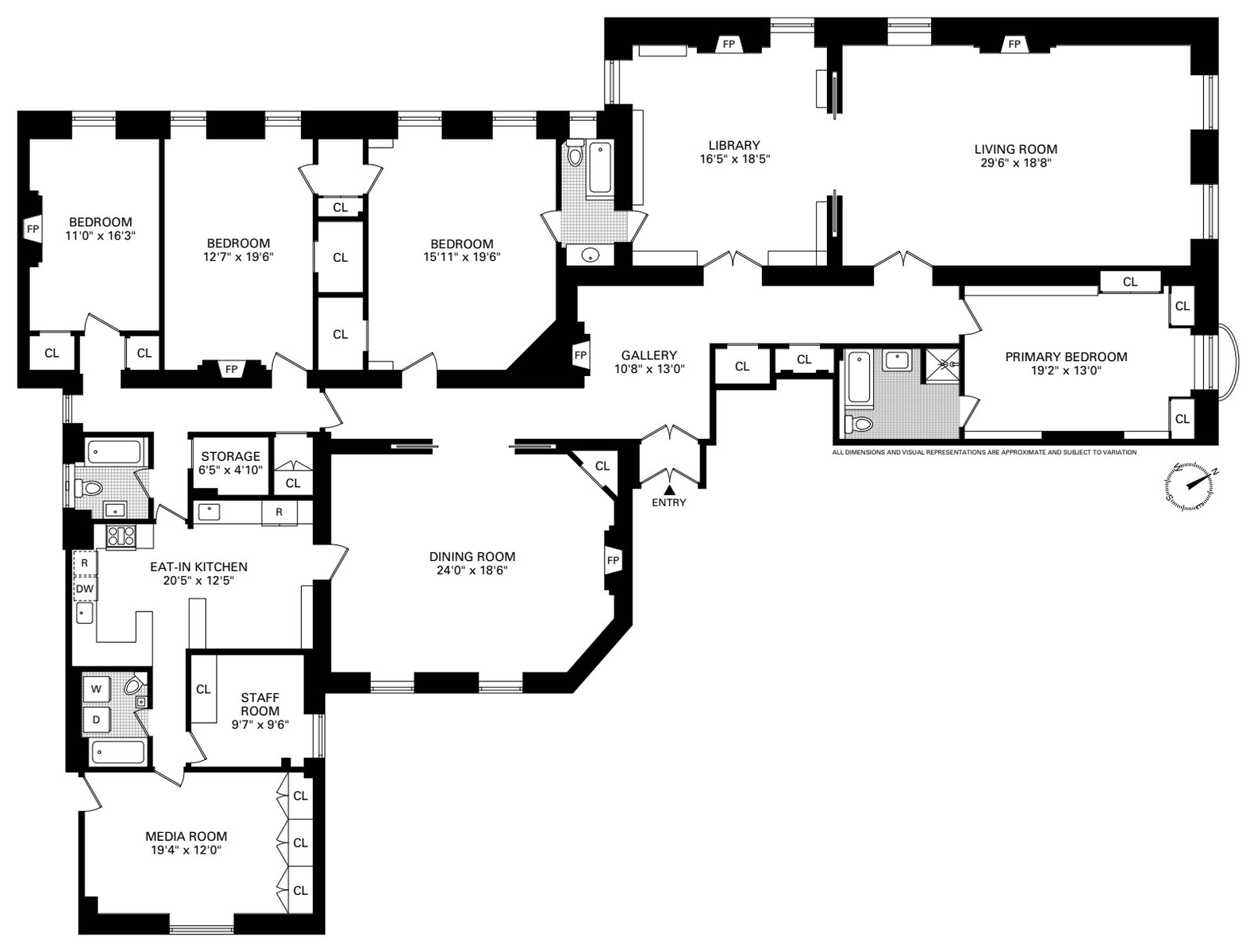
Within, we find residence 56; at approximately 4,500 sqft, it's one of the largest natural layouts within the entire house. Upon entering the home, not only do you see the grandeur of Hardenbergh's unique design, you feel it. You feel the elegance, the history, the stories. You observe the artisanship and the elegance of a past architectural time. You're struck by the 12.5' ceilings, balanced by a scale and proportion that must be experienced, the 10' foot mahogany doors and the seductive passage ways, the stately corner living room; which is adjoined by a warm and inviting parlour. Together they comprise a 46' living expanse; you can just imagine imagine the social gatherings and events. Rivaling the living room is the grand dining room, quite unlike anything you see today. This home further provides 4 to 5 voluminous bedrooms and additional chambers that can be used as a library, media room, game room whatever your needs require. The residence showcases exquisite handcrafted woodwork and custom paneling, refined crown moldings that frame the rooms with quiet grandeur. Expansive, light-filled windows, bordered by classic shutters, enhance the sense of space and grace. Discreetly placed sliding pocket doors preserve both flow and privacy, while gracefully appointed functioning fireplaces serve as warm focal points. Ample closets and generous built-in storage reflect thoughtful 19th-century practicality, while the spacious eat-in kitchen lends to the tradition of comfort and hospitality that defines this enduringly elegant home.
Constructed between 1880-1884, the lore of The Dakota captivates all of us. At the time, with the center of the city's activity some 50 blocks south, Clark's concept was considered bold and risky, as opposed to pioneering. Clark proved everyone wrong and the building was an immediate and eminent success.
Each generation experiences a sense of pride in their preservation and stewardship. Like no other, The Dakota established itself among the most renowned and recognizable residences in the world. It's unrivaled in its singularity, rich history, celebrated occupants and the architectural significance which remain to this day. It was built to last...timeless. This is a home that truly captures everything you had imagined it lives up to its legend.
Clark, whose own apartment was said to have been designed with sterling silver inlaid floors, passed in 1882, 2 years prior to its completion, Hardenbergh, would go on to design The Plaza Hotel.
The Dakota offers full-time doormen and concierge service, a fitness center and private storage. There is a 3% flip tax paid by the buyer.
The Dakota is the crown jewel among the most extraordinary residences of Central Park West. It's the most storied residential building in New York's long history. The late 1870s was a time of burgeoning prosperity. A post-war boom saw the proliferation of Mansion and Townhouse living for the affluent; it was a representation of status. It was then that Edward Cabot Clark, architect of the Singer Sewing Machine Company fortune, conceived of an apartment house to be built, as an alternative, for precisely those affluent who preferred not manage the responsibilities of caring for a
house. His vision was to preserve the aspirational and distinctive way of life characterized by sophistication, exquisite taste, privacy, pleasure and service for those accustomed. This was to be a house of a different kind.
Clark commissioned Henry Janeway Hardenbergh to design what would become the most magnificent residence in all of Manhattan. A "genteel fortress" as it was once described, monumental in scale yet with the intimacy of home. A fortress in that it was built with nearly 4 foot thick walls at its base, tapering to approximately 2 feet at the roof line. The breadth of the floors, made of thick layers of massive timber, earth and mortar provide an energy of stillness and peace. The facade possesses an eclectic mix of steep gables, oriel windows, dormers, cupolas, finials and the nostalgic gas lanterns. As you pass through the elaborate iron gates you're transported to a private open air garden court. Together this remarkable assemblage of features has made it difficult to pinpoint an exact style, which has been described in prior writings as a mix between German and French Renaissance styles, even as Victorian Chateau, Victorian Kremlin, Brewery Brick, Pseudo-Gothic and Middle European Post Office. No two apartments are structurally the same.
Within, we find residence 56; at approximately 4,500 sqft, it's one of the largest natural layouts within the entire house. Upon entering the home, not only do you see the grandeur of Hardenbergh's unique design, you feel it. You feel the elegance, the history, the stories. You observe the artisanship and the elegance of a past architectural time. You're struck by the 12.5' ceilings, balanced by a scale and proportion that must be experienced, the 10' foot mahogany doors and the seductive passage ways, the stately corner living room; which is adjoined by a warm and inviting parlour. Together they comprise a 46' living expanse; you can just imagine imagine the social gatherings and events. Rivaling the living room is the grand dining room, quite unlike anything you see today. This home further provides 4 to 5 voluminous bedrooms and additional chambers that can be used as a library, media room, game room whatever your needs require. The residence showcases exquisite handcrafted woodwork and custom paneling, refined crown moldings that frame the rooms with quiet grandeur. Expansive, light-filled windows, bordered by classic shutters, enhance the sense of space and grace. Discreetly placed sliding pocket doors preserve both flow and privacy, while gracefully appointed functioning fireplaces serve as warm focal points. Ample closets and generous built-in storage reflect thoughtful 19th-century practicality, while the spacious eat-in kitchen lends to the tradition of comfort and hospitality that defines this enduringly elegant home.
Constructed between 1880-1884, the lore of The Dakota captivates all of us. At the time, with the center of the city's activity some 50 blocks south, Clark's concept was considered bold and risky, as opposed to pioneering. Clark proved everyone wrong and the building was an immediate and eminent success.
Each generation experiences a sense of pride in their preservation and stewardship. Like no other, The Dakota established itself among the most renowned and recognizable residences in the world. It's unrivaled in its singularity, rich history, celebrated occupants and the architectural significance which remain to this day. It was built to last...timeless. This is a home that truly captures everything you had imagined it lives up to its legend.
Clark, whose own apartment was said to have been designed with sterling silver inlaid floors, passed in 1882, 2 years prior to its completion, Hardenbergh, would go on to design The Plaza Hotel.
The Dakota offers full-time doormen and concierge service, a fitness center and private storage. There is a 3% flip tax paid by the buyer.
Amenities
Driveway; Garden; Fitness Room; Laundry Room; Private Storage;
- Washer / Dryer
- Elevator
- Fitness Facility
- Full service
- Garden
- Laundry Room
Neighborhood

More listings:

RLS Data display by Nest Seekers LLC.
All information furnished regarding property for sale, rental or financing is from sources deemed reliable, but no warranty or representation is made as to the accuracy thereof and same is submitted subject to errors, omissions, change of price, rental or other conditions, prior sale, lease or financing or withdrawal without notice. International currency conversions where shown are estimates based on recent exchange rates and are not official asking prices.
All dimensions are approximate. For exact dimensions, you must hire your own architect or engineer.